To live healthy is to eat healthy. Good day! This our healthy blog content for today. Enjoy, learn, and discover!
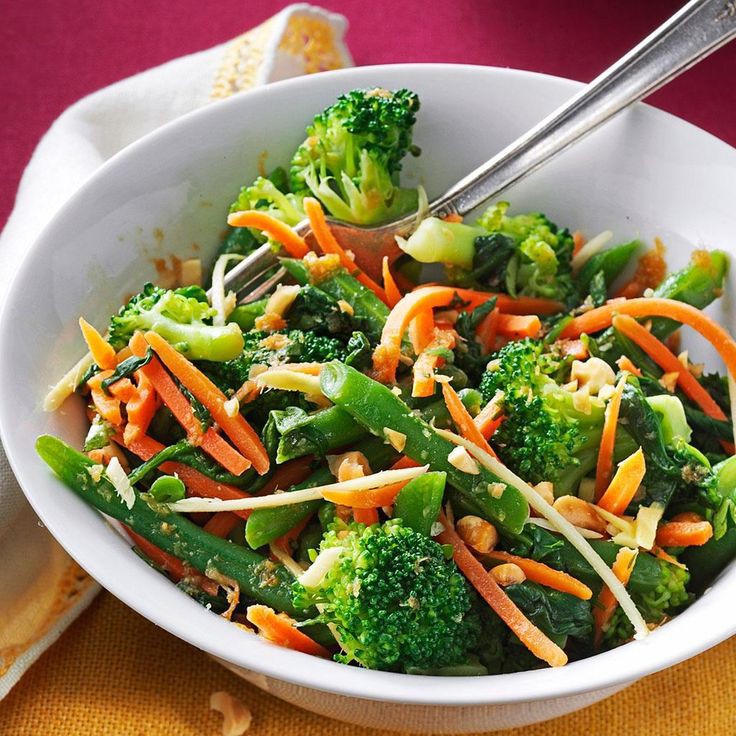
Origin
“Salad, a term derived from the Latin sal (salt), which yielded the form salata, ‘salted things’ such as the raw vegetables eaen in classical times with a dressing of oil, vinegar or salt. The word turns up in Old French as salade and then in late 14th century English as salad or sallet.”
Why do we call it salad?
The basis for the word salad is ‘sal’, meaning salt. This was chosen because in ancient times, salt was often an ingredient in the dressing.
Food historians tell us salads (generally defined as mixed greens with dressing) were enjoyed by ancient Romans and Greeks. As time progressed, salads became more complicated. Recipes varied according to place and time. Dinner salads, as we know them today, were popular with Renaissance folks. Composed salads assembled with layers of ingredients were enjoyed in the 18th century. They were called Salmagundi. Today they are called chef’s salad.
—Oxford Companion to Food, Alan Davidson [Oxford Univeristy Press:Oxford] 2nd edition, 2006 (p. 682)
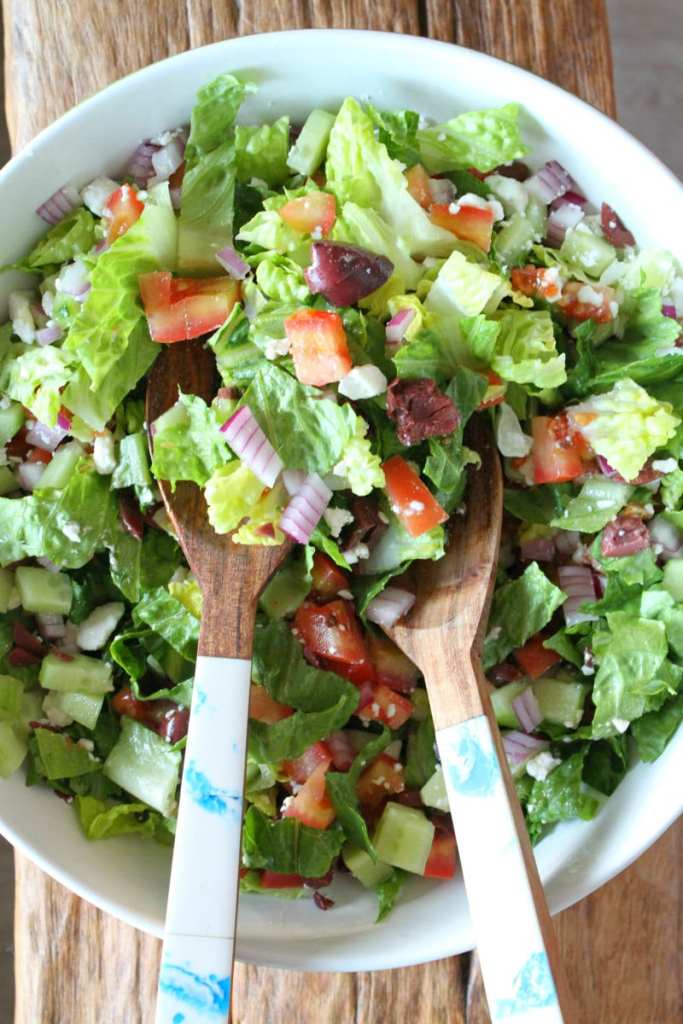
Good to know!
Salad greens contain Vitamin A, Vitamin C, beta-carotene, calcium, folate, fiber, and phytonutrients. Leafy vegetables are a good choice for a healthful diet because they do not contain cholesterol and are naturally low in calories and sodium.
Loaded with vitamins and minerals, eating a salad a day will also increase the level of powerful antioxidants in your blood. The basis of any salad, leafy greens, offer a huge nutritional benefit. All of these have substantiated positive effects, plus antioxidant and anti-inflammatory benefits within the body.
Health Expert Says!
Health Benefits of Vegetables. By WebMD Editorial Contributors
Reviewed by Dan Brennan, MD on September 19, 2020
Vegetable is a broad term that refers to the edible parts of plants, which are usually their leaves, roots, fruits, or seeds. Vegetables are a staple food across the world and are a fundamental part of modern agriculture.
Since they’re low in calories but high in nutrients, most health experts recommend that you consume vegetables daily. There’s a scientific consensus that a balanced, rotating diet of different varieties of vegetables is one of the best ways to source nutrients from your food starting at a young age.
Vegetables are full of essential vitamins, minerals, and antioxidants that provide many important health benefits to your body. For instance, carrots are known for being very high in vitamin A, which plays an important role in eye health, as you grow older.
Improved Digestive Health
Vegetables are a good source of dietary fiber, a type of carbohydrate that helps pass food through your digestive system. Studies show that fiber may also improve vitamin and mineral absorption in the body, which could potentially raise your daily energy levels.
Lower Blood Pressure
Many green leafy vegetables like kale, spinach, and chard contain potassium. Potassium helps your kidneys filter sodium out of your body more efficiently, which can reduce your blood pressure.
Lower Risk of Heart Disease
Green leafy vegetables also contain v itamin K, which is believed to prevent calcium from building up in your arteries. This can lower your risk of arterial damage and help prevent many heart health complications in the future.
Diabetes Control
Vegetables are particularly high in fiber, which is needed for optimal digestion. They have a low glycemic index, so your blood sugar won’t rise quickly after a meal. The American Diabetes Association recommends at least 3 to 5 servings per day of non-starchy vegetables like broccoli, carrots, or cauliflower.
Vegetable Salad Recipe
There are various ways on how to prepare a healthy delicious vegetable salad!
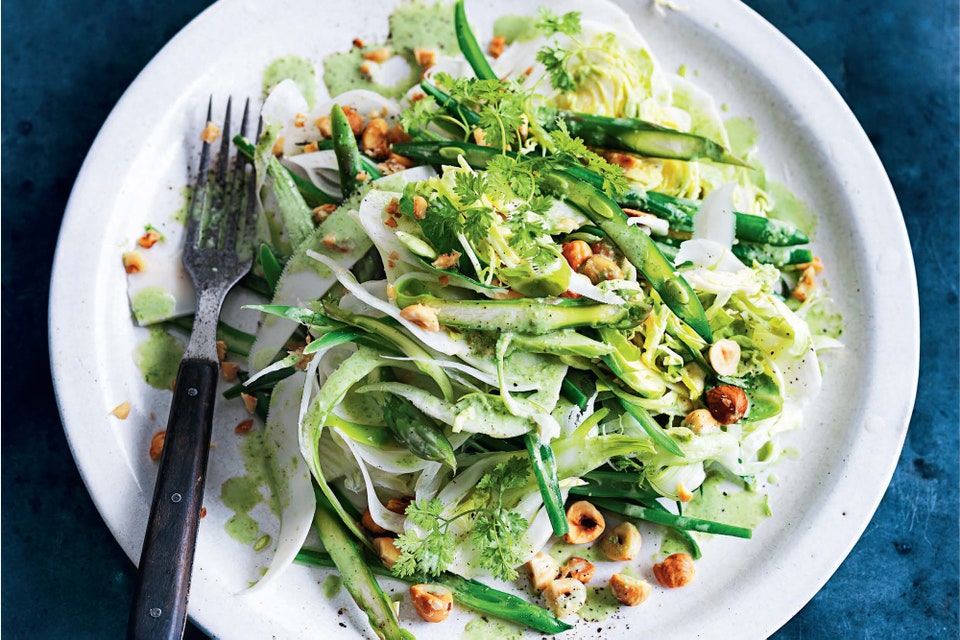
Ingredients
For the green dressing:
✓1/4 cup (70g) plain Greek-style (thick) yoghurt
✓1/4 cup (60ml) buttermilk
✓2 tablespoons chopped tarragon
✓2 tablespoons chopped chives
✓2 tablespoons lemon juice
✓1 clove garlic, crushed
✓2 anchovies, finely chopped
✓Sea salt and cracked black pepper
For the salad:
✓200g Brussels sprouts, blanched and sliced
✓1 bunch asparagus (150g), blanched and sliced
✓150g green beans, trimmed, blanched and shredded
✓1 small fennel bulb (180g), trimmed and thinly sliced
✓150g ricotta salata, shaved
✓1/2 cup chervil sprigs
✓1/3 cup (45g) roasted hazelnuts, skins removed and chopped
Procedure
To make the green dressing, place all the ingredients in a jug and, using a hand-held stick blender, blend until smooth. Place the vegetables in a large bowl and toss to combine. Divide between serving plates and top with the ricotta salata. Drizzle with the dressing and top with the chervil and hazelnuts to serve.
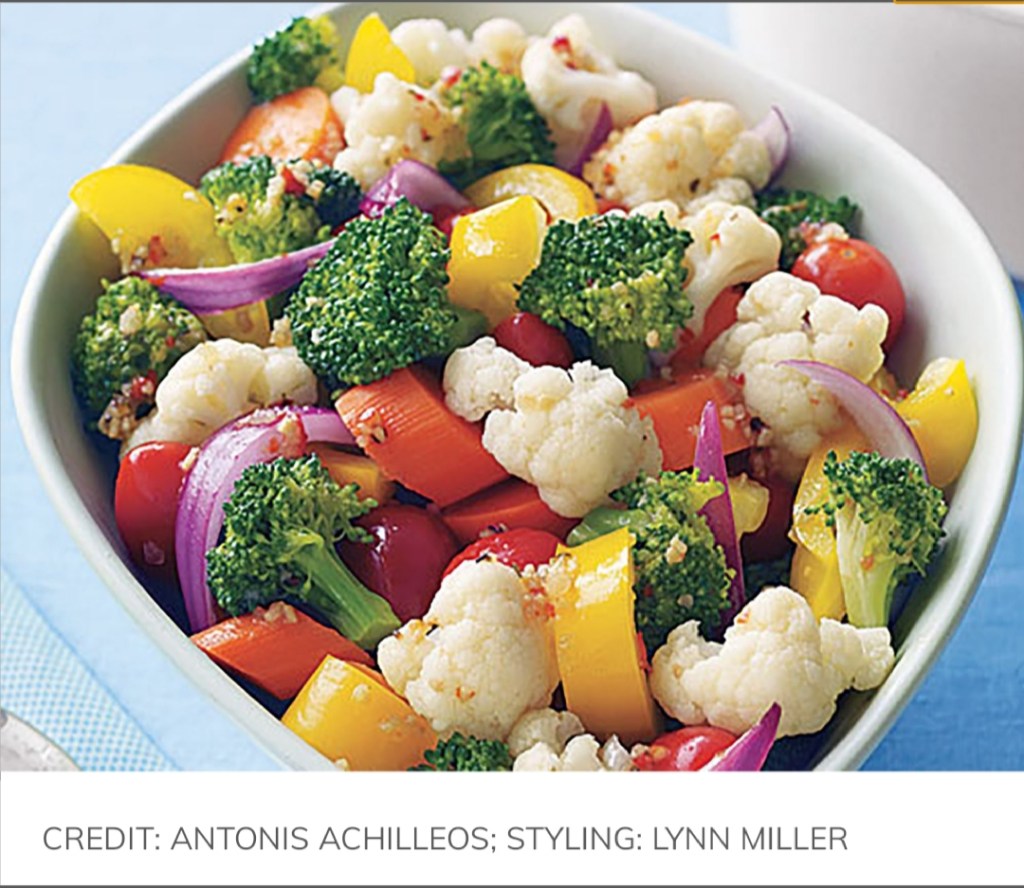
Ingredients
Dressing:
✓2 tablespoons red wine vinegar
✓1 tablespoon white wine vinegar
✓1 clove garlic, finely minced
✓1 teaspoon Italian seasoning
✓2 teaspoons chopped fresh parsley
✓Pinch of crushed red pepper
✓½ teaspoon sugar
✓½ teaspoon ground mustard
✓⅓ cup plus 1 Tbsp. olive oil
✓Salt and pepper
Salad:
✓2 large carrots, cut into 1/2-inch slices on the diagonal
✓2 cups broccoli florets
✓2 cups cauliflower florets
✓1 yellow bell pepper, seeded and cut into large dice
✓1 red onion, cut into thin wedges
✓2 cups cherry tomatoes
Procedure
Step 1
Bring a large pot of water to a boil. Make dressing: In a bowl, whisk together all ingredients except oil, salt and pepper. Whisking constantly, slowly drizzle in oil. Season with salt and pepper.
Step 2
Make salad: Add carrots, broccoli and cauliflower to boiling water and cook until just tender, about 4 minutes. Drain and rinse under cold water.
Step 3
In a large salad bowl, toss cooked vegetables, bell pepper, onion and cherry tomatoes with dressing. Cover and chill for at least 30 minutes. Toss again just before serving.
Nutrition Facts
Per Serving: 129 calories; fat 11g; saturated fat 2g; protein 2g; carbohydrates 9g; fiber 3g; sodium 178mg.
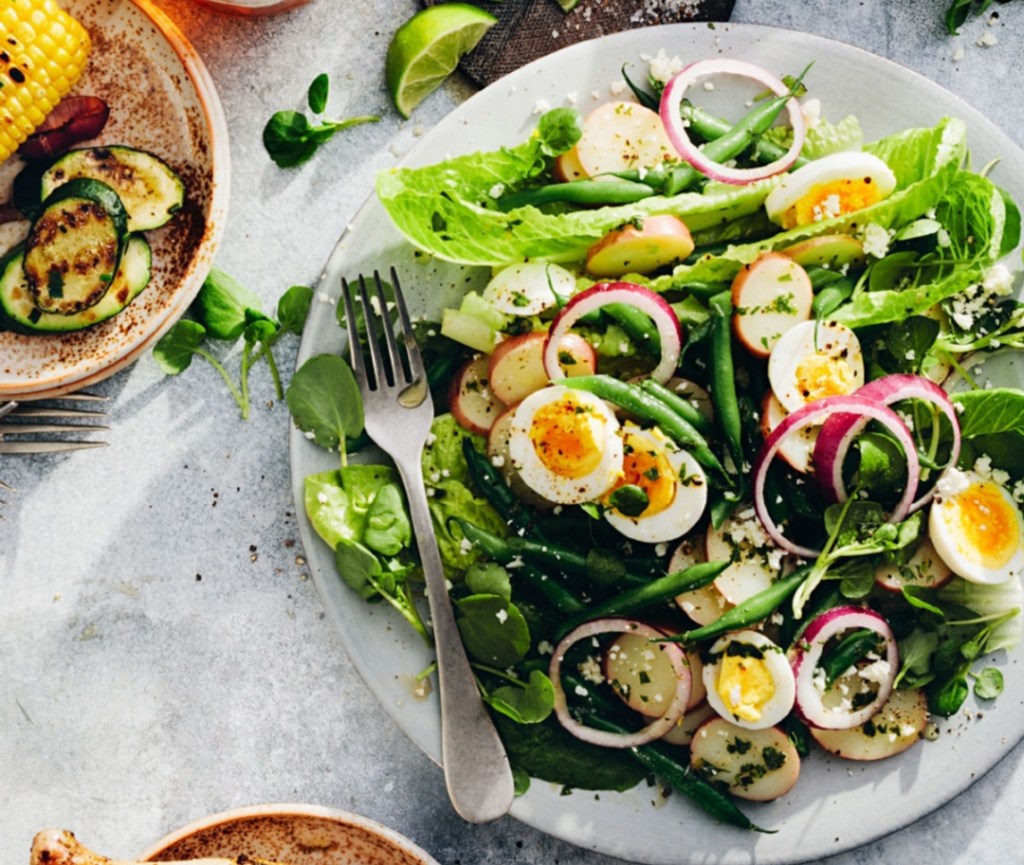
Ingredients
✓¼ cup canola oil
✓¼ cup extra-virgin olive oil
✓3 tablespoons lime juice
✓1 ½ tablespoons finely chopped fresh cilantro
✓½ teaspoon salt
✓½ teaspoon ground pepper
✓2 cups mixed vegetables (steamed: sliced small red potatoes, carrots or beets, green beans, peas; raw: sliced radishes, cucumbers or tomatoes)
✓6 leaves romaine or leaf lettuce
✓1 small bunch watercress, large stems removed
✓1 hard-boiled large egg, sliced
✓1 thick slice red onion, broken into rings
✓Crumbled Mexican queso fresco, feta or farmer’s cheese for garnish
Procedure
Step 1
Whisk canola and olive oils, lime juice, cilantro, salt and pepper in a medium bowl until thoroughly blended. Add mixed vegetables and toss to coat.
Step 2
Line a large serving platter with lettuce. Scoop the dressed vegetables onto the platter. Surround with watercress and top with egg, onion and cheese, if desired.
Nutrition Facts
Serving Size: about 1 1/2 cups
Per Serving: 214 calories; protein 2.6g; carbohydrates 7.7g; dietary fiber 1.9g; sugars 1.8g; fat 19.8g; saturated fat 2.3g; cholesterol 31.1mg; vitamin a iu 4105.9IU; vitamin c 12mg; folate 73.1mcg; calcium 39.8mg; iron 0.9mg; magnesium 19.3mg; potassium 304.1mg; sodium 216.6mg.
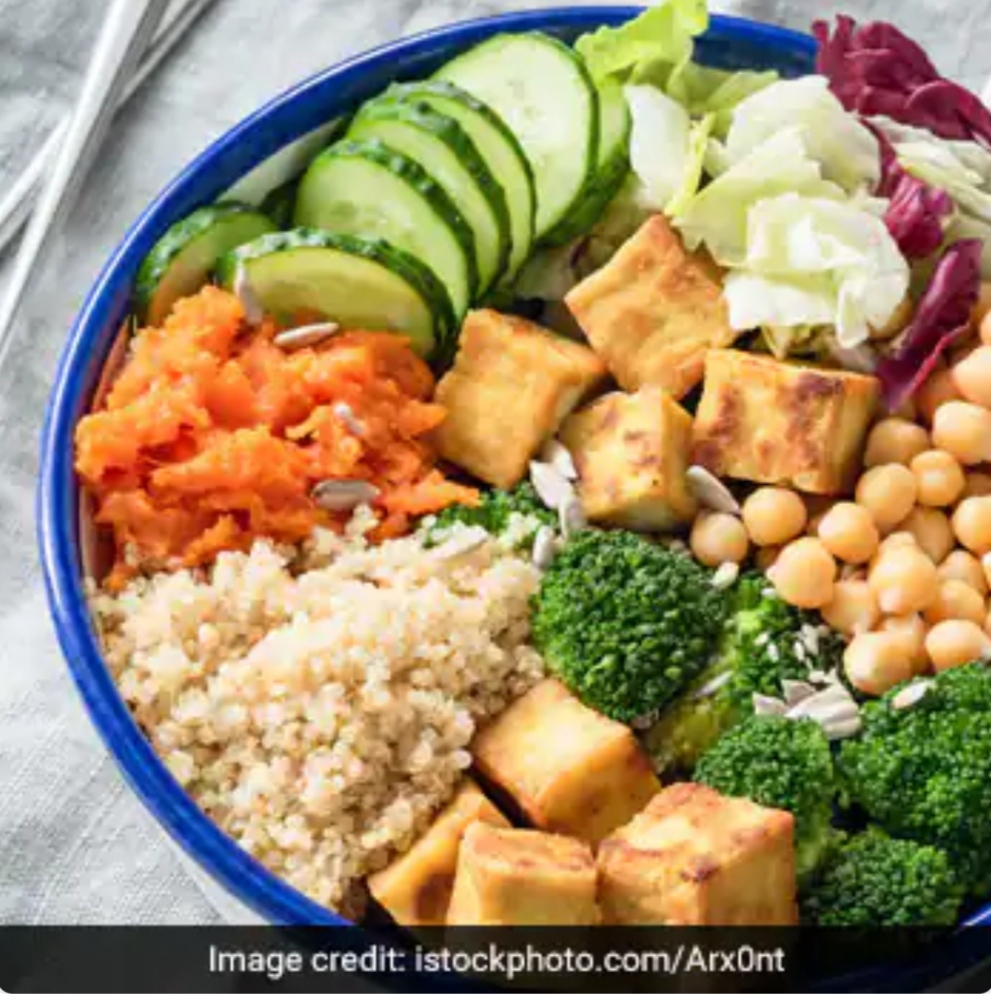
Niru Gupta
Recipe in Hindi
Ingredients
✓2 Medium Ripe tomatoes
✓2 cups Cabbage, shredded1 Capsicum, sliced
✓2 Carrots, sliced2 tbsp Vinegar1 tbsp Honey
✓2 tsp SaltA pinch of Pepper
✓2 tbsp Yogurt
Procedure
1.Cut the tomatoes into 8 segments each lengthwise.
2.Mix the yogurt, salt, pepper, honey and vinegar and blend well together.
3.Keep both the vegetables and the dressing refrigerated separately until ready to serve.4.When ready to serve, mix the vegetables and the dressing together.
5.This has to be done at the last minute, as the vegetables combined with the salt tend to shed their juices and thus become limp and soggy if kept too long.
Conclusion
Hence, eating vegetable salad brings so much benefits to our body. We are not just enjoying its delicious taste but, we are harnessing alot of nutrients from it as well. Try the different ways to prepare these healthy and delicious foods (see recipes above) . So, lets be wise and choose to be healthy by living healthy, and eating healthy!
I hope you learn and gain some significant and valuable lessons from our blog today.
For more healthy contents and recipes, feel free to visit our website https://httphealthiswealth.health.blog/https://httphealthiswealth.health.blog/
For Healthy food tips visit us on Facebook:
https://www.facebook.com/jorissazozobrado
https://www.facebook.com/attorney.chemadalerojo
https://www.facebook.com/ace.ricaplaza.10
https://www.facebook.com/mark.temple.9693
https://www.facebook.com/dontbegredyy
Thank you and Godbless!
Sources:
https://www.foodtimeline.org/foodsalads.html
https://www.webmd.com/diet/health-benefits-vegetables
https://www.epicurious.com/recipes/food/views/green-vegetable-salad
/https://www.eatingwell.com/recipe/273387/mixed-vegetable-salad-with-lime-dressing/
https://www.myrecipes.com/recipe/chunky-vegetable-salad
https://food.ndtv.com/recipe-mixed-vegetable-salad-98890?amp=1&akamai-rum=off
Copyright ©2022 all rights reserved.
 Healthy Blog Contents